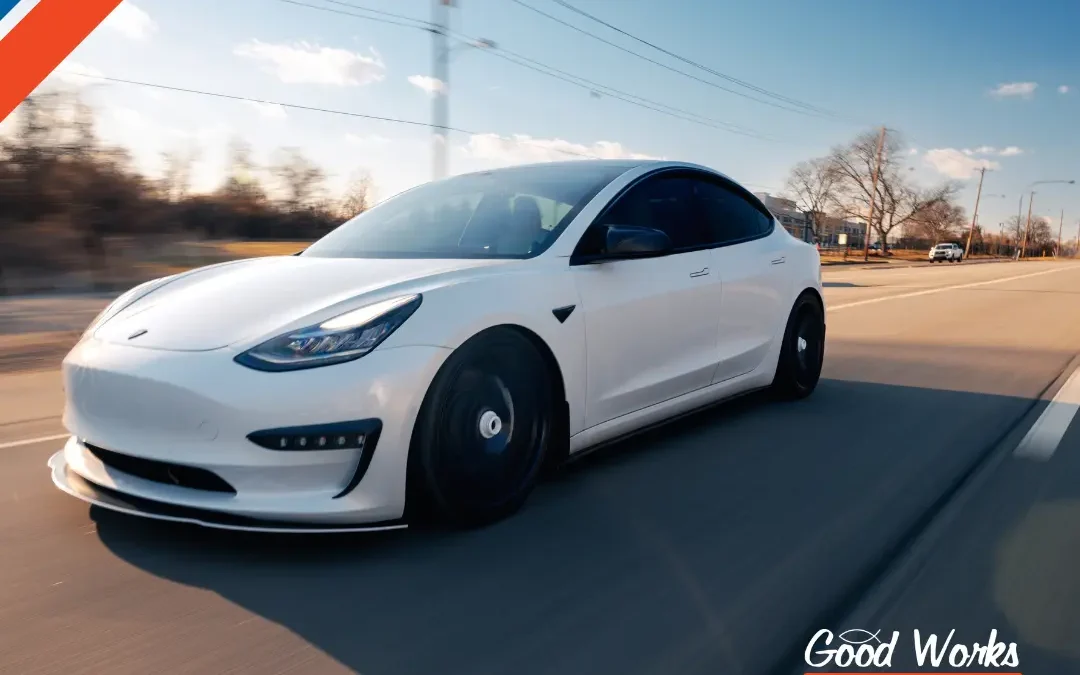
If you drive a Tesla, you may enjoy fewer traditional maintenance requirements than you had with a gas-powered vehicle. No engine oil changes, no spark plugs, and no conventional fuel system maintenance.
But there’s one maintenance item Tesla owners definitely can’t ignore: tires.
In fact, some Tesla owners are surprised by how quickly their tires seem to wear. If you’ve found yourself wondering, “Why do Tesla tires wear out so fast?”, there isn’t necessarily anything wrong with your vehicle—or your tires.
A combination of vehicle weight, instant electric torque, driving habits, tire pressure, wheel alignment and other factors can all affect Tesla tire wear. And here in Arizona, extreme temperatures and challenging road conditions add additional considerations.
The good news is that proper Tesla tire maintenance can help you get the most life possible from your tires while maintaining the handling, traction and performance you expect from your vehicle.
At Good Works Auto Repair in Tempe, AZ, we provide Tesla maintenance services including tire changes and rotations, wheel alignments, brake service and other routine maintenance. Here’s what Tesla owners should know about tire wear and how to help their tires last longer.
Do Tesla Tires Really Wear Out Faster?
They can, but there isn’t one universal lifespan for Tesla tires.
How long your tires last depends on the specific Tesla model and tire, how and where you drive, your acceleration habits, tire inflation, wheel alignment, rotation frequency and many other factors.
Some of the same characteristics that make an electric vehicle enjoyable to drive can also be demanding on its tires.
That doesn’t mean you should expect your Tesla tires to wear out prematurely. Instead, it means regular tire inspections and preventive maintenance are particularly important for Tesla owners.
Why Do Tesla Tires Wear Out So Fast?
There are several potential reasons for accelerated Tesla tire wear. Often, more than one factor is involved.
1. Tesla Vehicles Can Be Heavy
Electric vehicles rely on large battery packs, which contribute significant weight to the vehicle.
Your tires support that weight every mile you drive. During acceleration, braking and cornering, the forces acting on the tires can become even greater.
Vehicle weight by itself doesn’t mean that your tires will wear excessively. Tires are selected and rated for the vehicles they’re designed to support. However, the combination of vehicle weight and other factors can contribute to increased tread wear.
2. Instant Torque Can Be Hard on Tires
One of the most noticeable differences between an electric vehicle and many gas-powered vehicles is the immediate availability of torque.
Press the accelerator in a Tesla and you can get an almost instantaneous response.
It’s fun—but frequent hard acceleration can also put additional stress on the tires.
Tesla itself notes that aggressive driving can accelerate tire wear and may make more frequent tire service necessary.
If maximizing tire life is your priority, smoother acceleration can help reduce unnecessary wear while potentially helping with energy efficiency as well.
3. Wheel Alignment Can Cause Uneven Tesla Tire Wear
Sometimes the problem isn’t how quickly all four tires are wearing. It’s how unevenly they’re wearing.
A wheel alignment problem changes how the tires contact the road. Even relatively small alignment issues can lead to abnormal tread wear over time.
Your Tesla may need an alignment inspection if you notice:
- Excessive wear on the inside or outside edge of a tire
- One tire wearing differently than the others
- The vehicle pulling to one side
- An off-center steering wheel
- Changes in steering or handling
- Uneven wear shortly after installing new tires
- Potholes, curbs and other road impacts can affect alignment as well.
Tesla recommends wheel alignment as needed and specifically identifies uneven tire wear and a vehicle pulling left or right as signs that alignment service may be appropriate. Tesla also recommends alignment after installing a new set of tires.
At Good Works Auto Repair, we provide Tesla wheel alignment in Tempe, AZ, helping local owners maintain proper handling while protecting their investment in their tires.
4. Incorrect Tire Pressure Can Shorten Tire Life
Proper tire inflation matters on every vehicle, and your Tesla is no exception.
Underinflation can cause excessive heat buildup and abnormal wear, while incorrect pressure in general can affect handling, efficiency and tire performance.
Tesla notes that underinflation can reduce both range and tire tread life.
Rather than relying on a generic PSI recommendation, check the tire and loading information label on your specific vehicle for the appropriate cold tire pressure. Tire pressure information is also available through your Tesla’s vehicle systems.
Keep in mind that tire pressure can change as temperatures change, so don’t assume that checking it once is enough.
5. Skipping Tire Rotations Can Create Uneven Wear
Tires don’t necessarily wear at identical rates or in identical patterns.
That’s why Tesla tire rotation can be an important part of preventive maintenance.
Rotating eligible tires helps distribute wear more evenly, potentially extending the useful life of the entire set.
Tesla currently recommends rotating tires every 6,250 miles or when the tread-depth difference between tires reaches 2/32 inch or greater, whichever comes first. Aggressive driving may require more frequent tire service.
However, not every Tesla wheel-and-tire configuration can be rotated in exactly the same pattern. Some vehicles may have staggered tire sizes or directional tires that limit how the tires can be moved.
A qualified technician can determine the appropriate rotation procedure for your particular setup.
6. Tire Choice Makes a Difference
Not every tire is the same, even when the size printed on the sidewall matches.
Tires can be engineered to prioritize different characteristics, including:
- Tread life
- Handling
- Traction
- Ride comfort
- Road noise
- Rolling resistance
- Efficiency
- Performance
Tesla says its Tesla-designed tires are developed to optimize characteristics including handling, comfort, road noise and range.
When it’s time for Tesla tire replacement, don’t make the decision based solely on finding a tire that physically fits the wheel. Make sure the tire is appropriate for your Tesla’s specifications, load requirements and intended use.
7. Arizona Heat Can Be Tough on Tires
Living in Tempe introduces another consideration: extreme Arizona temperatures.
Tesla notes that tires naturally degrade over time due to factors that include ultraviolet light, extreme temperatures, high loads and environmental conditions.
That’s especially relevant in the Phoenix area, where summer temperatures can be extreme and pavement temperatures can climb even higher.
Heat isn’t an excuse to ignore other causes of tire wear, such as poor alignment or improper inflation. Instead, Arizona’s climate makes routine tire inspection even more important.
Look for:
- Low tread depth
- Cracking
- Bulges
- Cuts
- Uneven wear
- Abnormal changes in tire pressure
- Other visible damage
If something doesn’t look right, have the tires professionally inspected.
What Does Uneven Tesla Tire Wear Look Like?
Don’t just look at whether your tires have tread remaining. Look at where the tread is disappearing.
Different wear patterns can provide clues about what may be happening.
Wear on One Edge of the Tire
Excessive wear along the inner or outer edge can be associated with wheel alignment problems.
If one edge is becoming noticeably smoother than the rest of the tread, schedule an inspection rather than waiting until the tire is completely worn.
Center Tread Wear
If the center of the tread is wearing significantly differently from the shoulders, tire pressure and other factors should be evaluated.
Wear on Both Shoulders
Abnormal wear around the shoulders of a tire can also warrant checking inflation, alignment and other potential causes.
One Tire Wearing Faster Than the Others
A significant difference between tires is another reason to have them inspected.
Rather than simply replacing the worn tire, it’s important to ask why it wore differently. Correcting an underlying alignment or other issue may help prevent the replacement tire from developing the same problem.
Signs Your Tesla Tires Need Attention
Don’t wait until you have a flat tire or can see cords through the tread.
Schedule a tire inspection if you notice:
- Uneven tread wear
- Low tread depth
- Cracks, cuts or bulges
- Repeated tire pressure warnings
- Vibration while driving
- Increased road noise
- Changes in handling
- The vehicle pulling left or right
- Steering wheel vibration
- A recent hard impact with a pothole or curb
Tesla notes that unbalanced tires can affect handling, tire life and steering components and recommends wheel balancing as needed, including when steering wheel vibration occurs.
Catching tire or alignment problems earlier can sometimes prevent unnecessary wear and help you get more useful life from your tires.
How to Make Tesla Tires Last Longer
You can’t prevent tire wear entirely. Tires are wear items and will eventually need replacement.
You can, however, take steps to help prevent unnecessary or uneven wear.
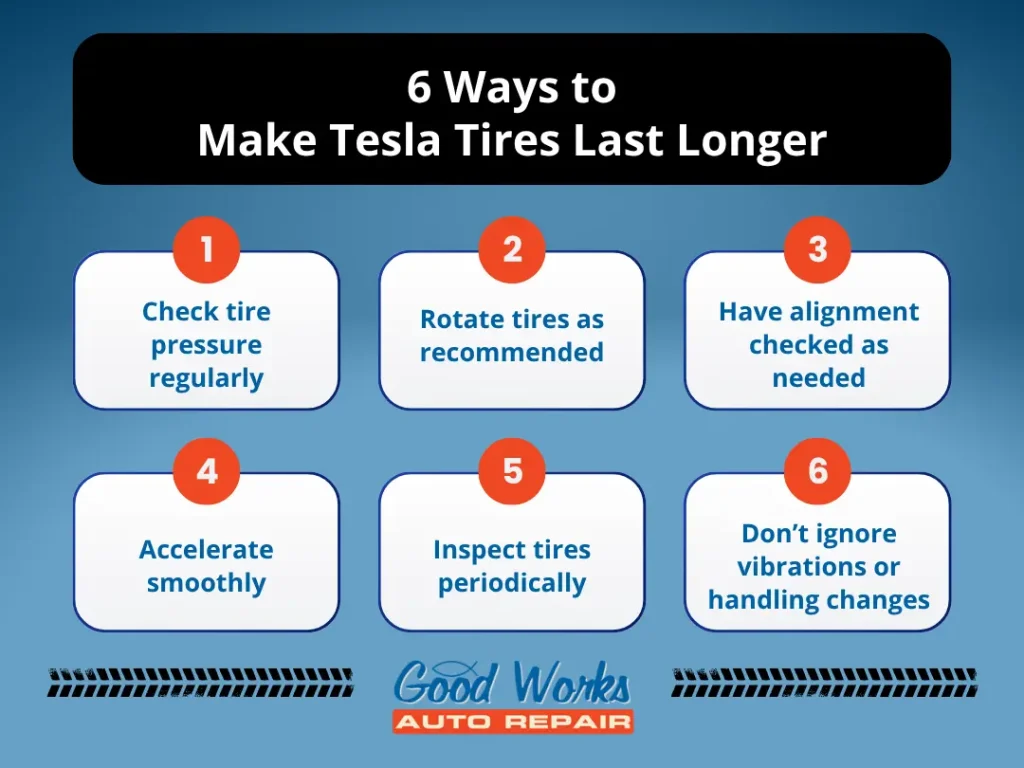
1. Check Your Tire Pressure Regularly
Monitor your Tesla’s tire pressures and keep them at the specification for your vehicle and tire configuration.
Don’t wait until a tire looks low. Modern low-profile tires may not look dramatically underinflated even when pressure needs attention.
2. Rotate Your Tesla Tires as Recommended
For vehicles with tires that can be rotated, following the appropriate rotation schedule helps promote more even wear.
Tesla’s current general recommendation is every 6,250 miles or when tread-depth differences reach 2/32 inch or greater, whichever comes first.
Your specific configuration matters, however, so follow the recommendations applicable to your Tesla and tires.
3. Have the Alignment Checked When You Notice Warning Signs
If the car pulls, the steering wheel is off-center or the tires show unusual wear, don’t simply keep driving until the tires need replacement.
A Tesla wheel alignment may help correct the underlying problem and prevent continued uneven wear.
Alignment is also worth considering after a substantial pothole or curb impact and when installing new tires.
4. Accelerate Smoothly
You bought an electric vehicle, so you’re probably going to enjoy that instant torque occasionally.
But if every stoplight becomes an acceleration test, your tires may pay the price.
Smooth acceleration and less aggressive cornering can help reduce unnecessary tire wear.
5. Inspect Your Tires
Take a few minutes periodically to look at all four tires.
Check the center and both edges of the tread rather than looking at only the easiest section to see.
If you notice a significant difference from one tire to another—or from one part of a tire to another—have the tires inspected.
6. Don’t Ignore Vibrations or Handling Changes
A new vibration isn’t something you should simply get used to.
Changes in steering, handling or ride quality can indicate a tire, wheel, balancing, alignment or suspension issue that deserves attention.
The sooner you identify the cause, the better your chance of preventing additional tire wear.
When Should Tesla Tires Be Replaced?
There isn’t one mileage number at which every Tesla tire needs replacement.
Tire life depends too heavily on tire type, driving conditions, vehicle configuration, maintenance and driving habits.
Instead, base replacement decisions on the actual condition of the tires.
Tesla’s current service procedures recommend tire replacement when tread depth reaches 4/32 inch or less, and Tesla also advises replacing tires before the tread wear indicators become visible.
Tires should also be evaluated for replacement if they have damage, excessive age, cracking or other conditions that could make continued use unsafe.
Tesla Tire Maintenance FAQs
Are Teslas harder on tires than gas-powered cars?
Not necessarily in every situation. Tire wear varies considerably among vehicles and drivers. However, characteristics common to electric vehicles—including substantial vehicle weight and immediate torque—can contribute to tire wear, particularly when combined with aggressive driving or inadequate tire maintenance.
How often should I rotate my Tesla tires?
Tesla currently recommends rotation every 6,250 miles or when the tread-depth difference between tires reaches 2/32 inch or more, whichever occurs first. Your tire configuration may affect the appropriate rotation pattern.
Can a Tesla get a wheel alignment at an independent repair shop?
Yes. Wheel alignment and many other routine Tesla maintenance services can be performed by qualified independent repair facilities with the appropriate equipment, information and expertise.
At Good Works Auto Repair, we provide professional Tesla wheel alignment in Tempe, AZ, along with tire and other routine Tesla maintenance services.
Does hard acceleration wear out Tesla tires faster?
It can. Tesla specifically notes that aggressive driving can accelerate tire wear and potentially require more frequent tire service. Smoother acceleration is one way to reduce unnecessary stress on your tires.
Does Arizona heat affect Tesla tires?
Extreme temperatures and UV exposure are among the environmental factors that can contribute to tire degradation over time. For Tempe-area Tesla owners, routine pressure checks and tire inspections are especially worthwhile during Arizona’s hottest months.
Should I replace all four Tesla tires at once?
It depends on the condition of the remaining tires and your vehicle’s configuration. Tesla recommends replacing tires in pairs unless the remaining tires are within 2/32 inch of the new tire’s tread depth. If only two tires are replaced, Tesla recommends placing the new tires on the rear. A tire professional can evaluate the tread depths and determine the appropriate approach for your vehicle.
Tesla Tire Service and Maintenance in Tempe, AZ
Your Tesla may not need oil changes or many of the traditional engine services associated with a gas-powered car, but that doesn’t make it maintenance-free.
Tires are one of the most important maintenance items on any Tesla.
Regular inspections, proper tire pressure, timely rotations and correct wheel alignment can help promote even tread wear, maximize tire life and maintain predictable handling.
If you’re noticing uneven Tesla tire wear, your Tesla needs a tire rotation or wheel alignment, or you’re simply not sure whether your tires are in good condition, Good Works Auto Repair can help.
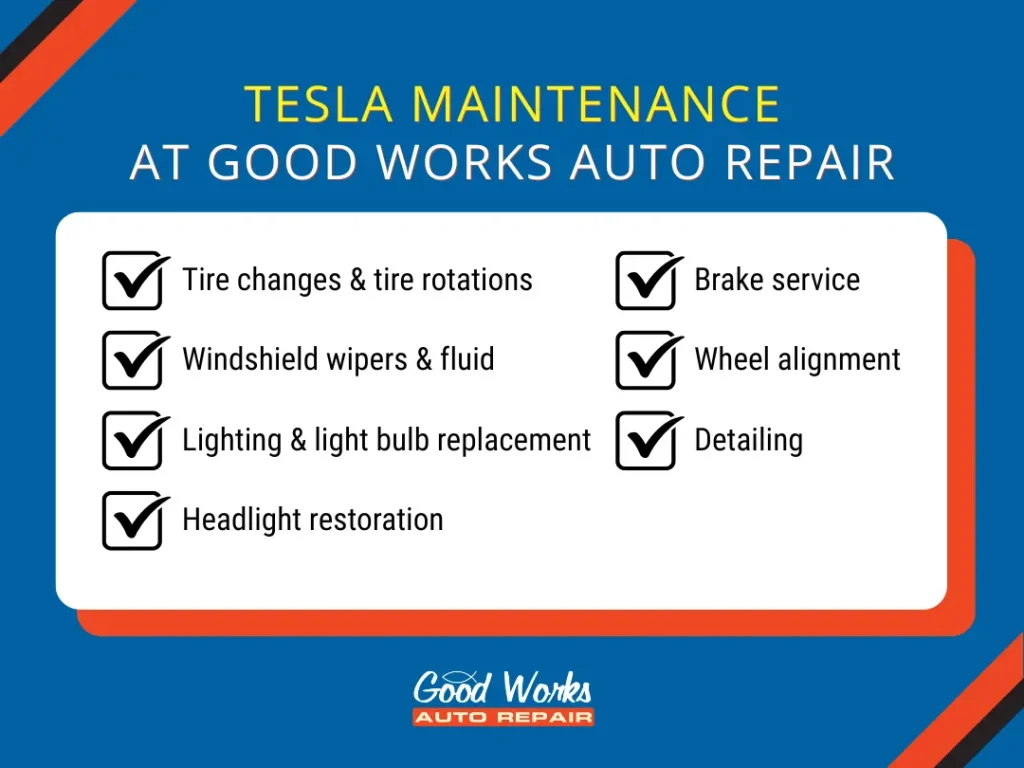
Our Tempe auto repair shop provides Tesla maintenance services including:
- Tire changes
- Tire rotations
- Wheel alignment
- Brake service
- Windshield wipers and washer fluid
- Lighting services
- Headlight restoration
- Other applicable Tesla maintenance services
We’re conveniently located at 2348 E. Broadway Road in Tempe, AZ, near the West Mesa border, and serve Tesla owners from Tempe, Mesa, Scottsdale, Chandler, Gilbert and communities throughout the East Valley.
Want to learn more about maintaining your Tesla? Read our Tesla Maintenance in Tempe, AZ: What Tesla Owners Need to Know guide for an overview of tires, brakes, alignment and other routine Tesla maintenance.
Schedule Tesla Maintenance at Good Works Auto Repair
Are your Tesla tires wearing unevenly? Is your vehicle pulling to one side? Are you due for a tire rotation, or do you simply want to know how much tread you have left?
Schedule Tesla maintenance with Good Works Auto Repair in Tempe, AZ.
Our team can inspect your tires, identify abnormal wear patterns and help you determine whether your Tesla needs a tire rotation, wheel alignment, new tires or another maintenance service.
Take care of your tires now so you can keep enjoying the performance, handling and efficiency that made you choose a Tesla in the first place.